Interaction Designer · 2024
The Distributed Museum, a master's thesis on how people could engage with art online once physical space stops being a constraint.
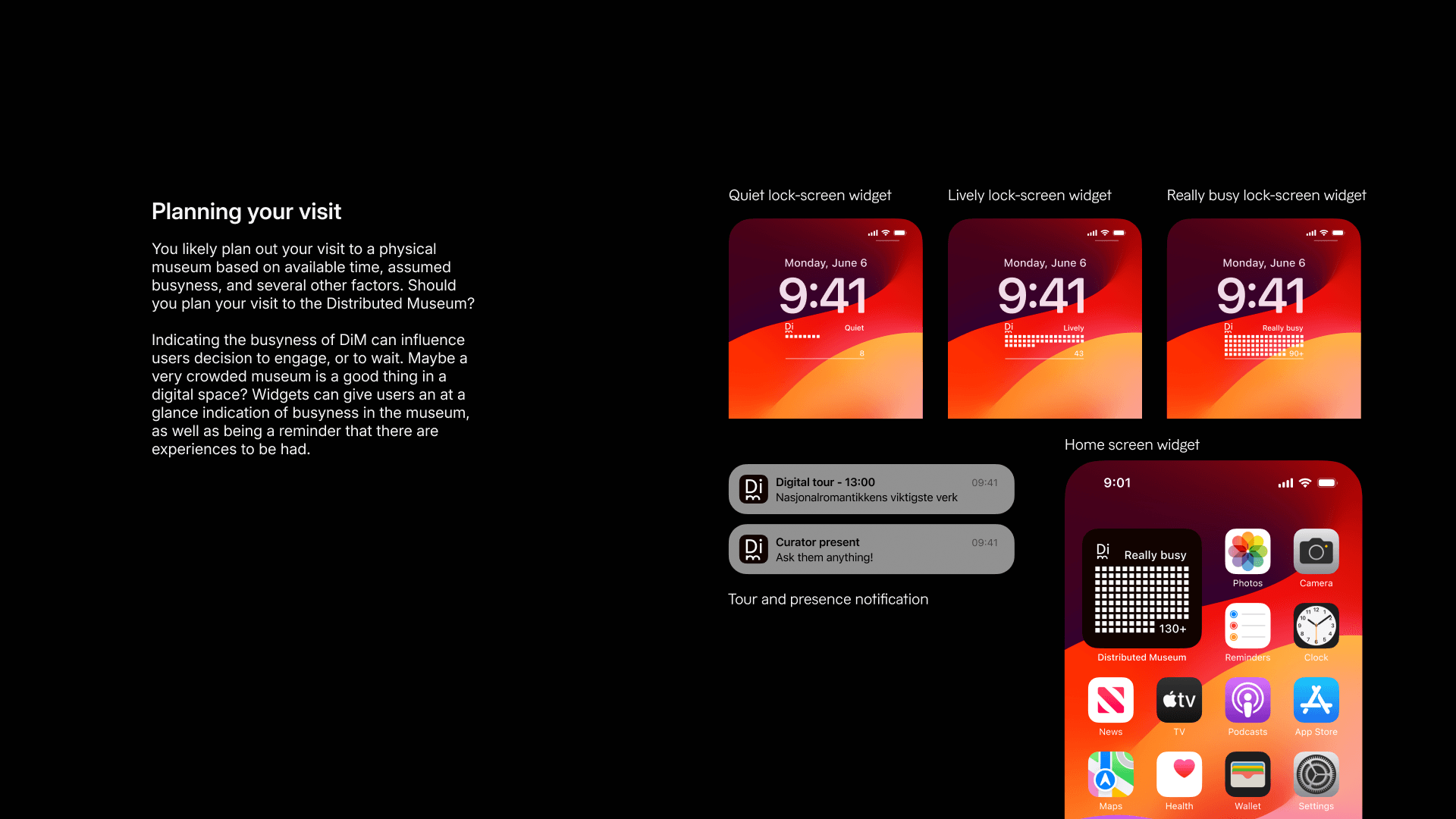
A museum visit is shaped by more than the art on the walls: the size of the room, the other people in it, the freedom to move at your own pace. In a building these are easy to take for granted. Online, they're much harder to recreate.
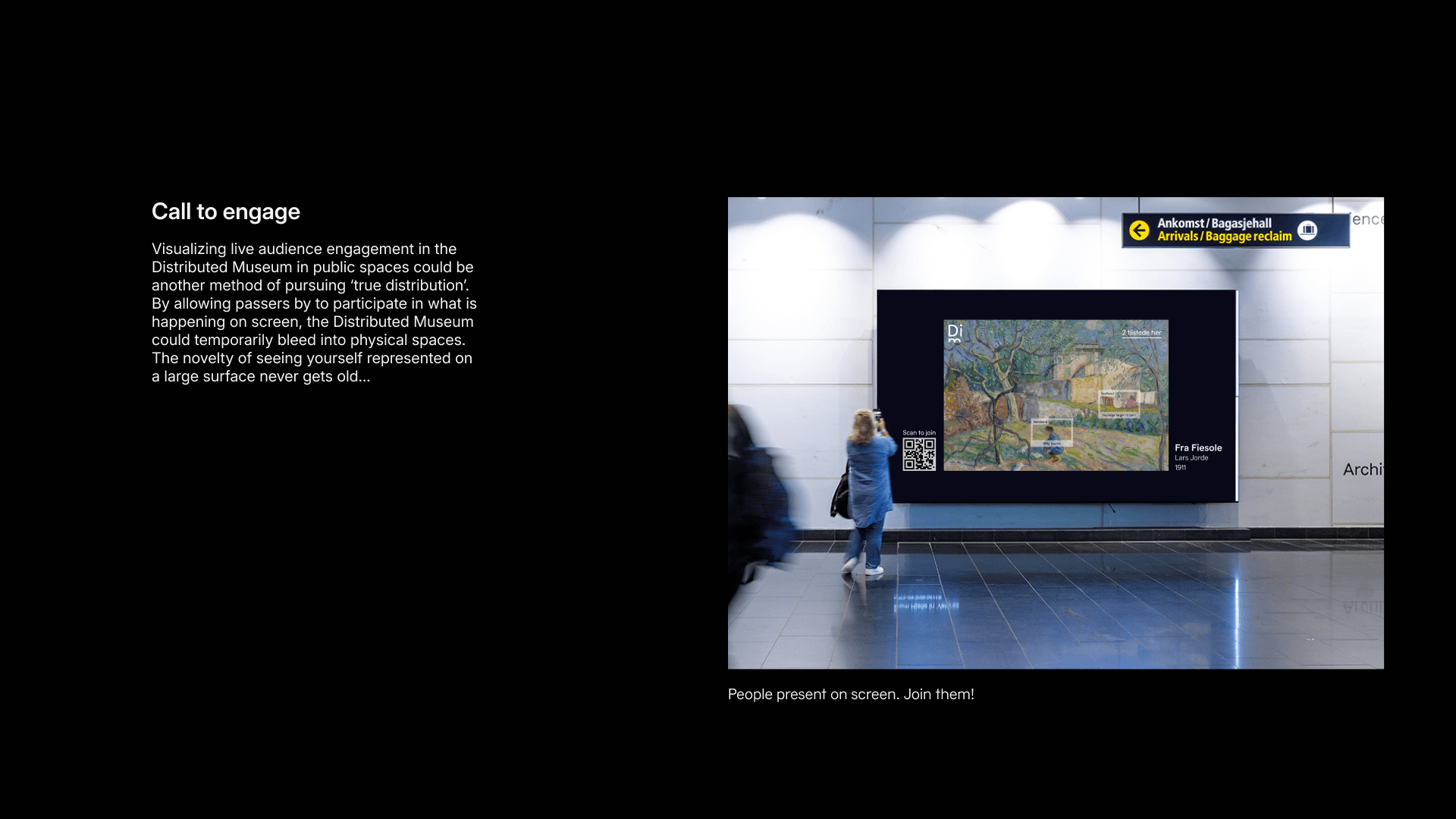
The National Museum holds one of the largest collections of paintings in Norway, and like most cultural institutions it is still working out what to do with the digitised version. Putting images on a screen is the easy part. The harder question is what kind of experience becomes possible without the building's constraints, and what gets lost on the way.
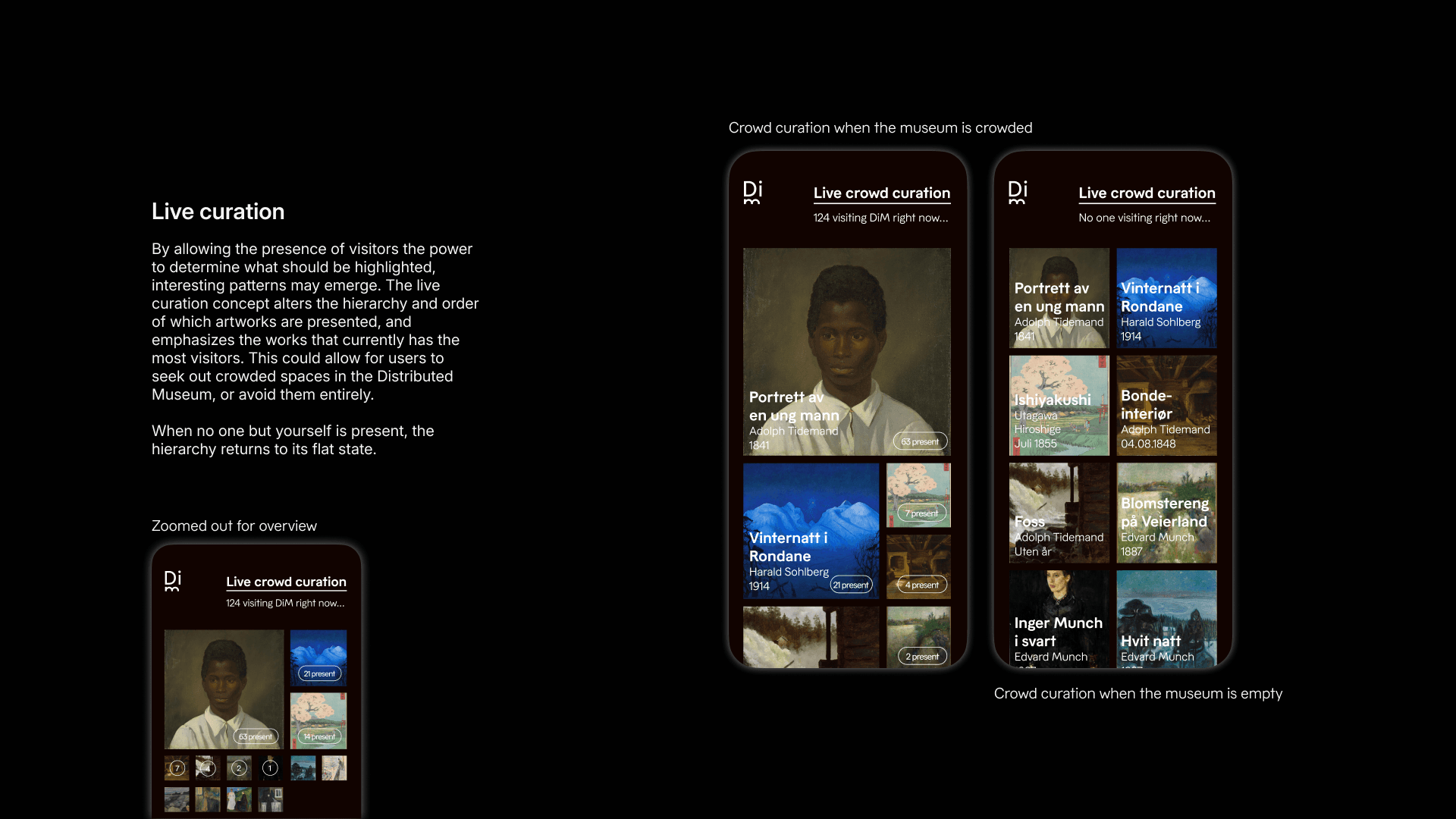
This diploma spent eighteen weeks on that question, in collaboration with the National Museum. The work went from field studies and expert interviews to concept development and testing, across four use cases: someone on their own, a group visiting together, strangers meeting around the same work, and teaching. Each one asks something different of a digital art experience.
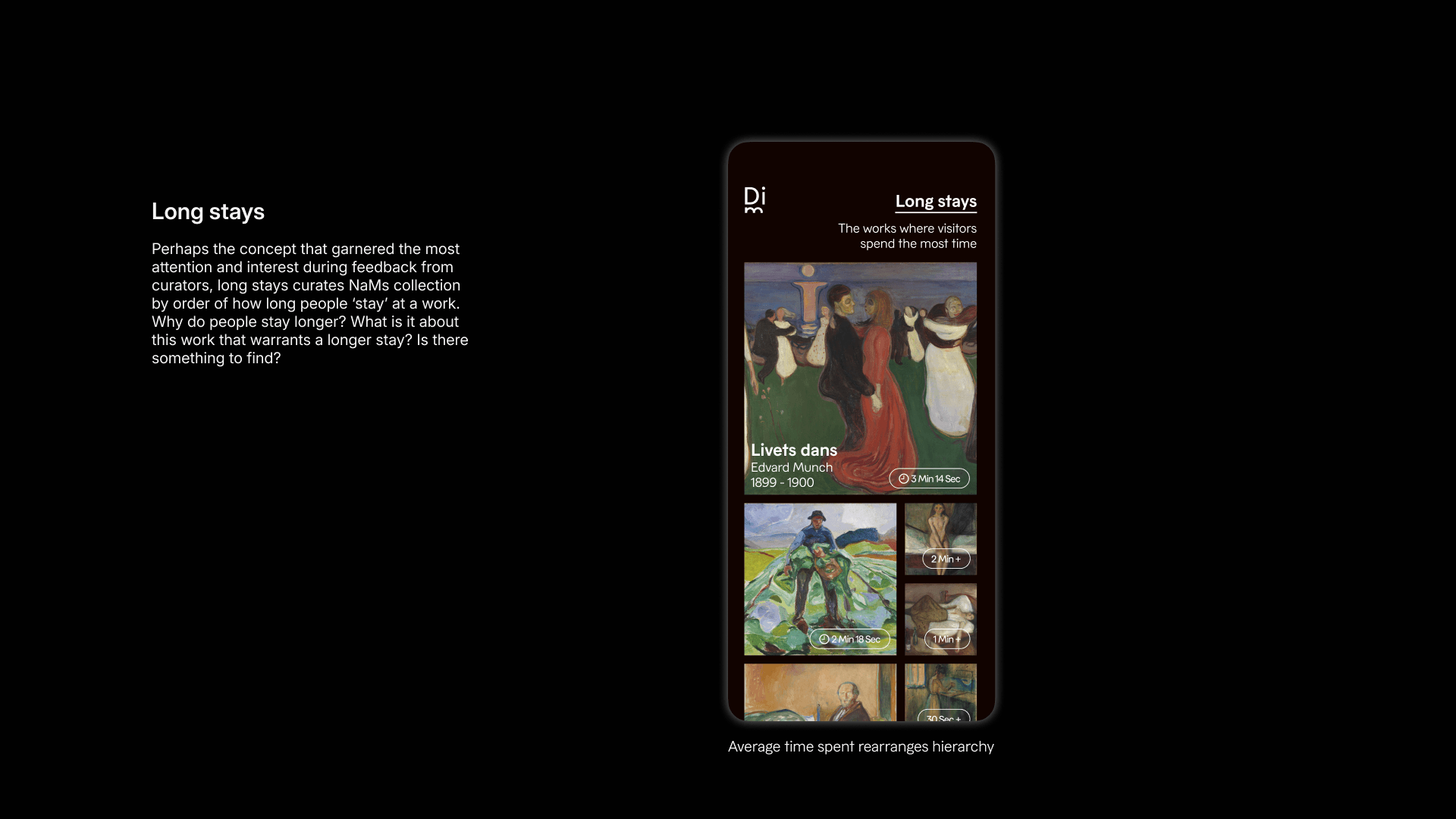
The result is a set of interaction concepts meant to start discussion, not settle it, since no single answer works for something as subjective as art. Together they show how much opens up for design when physical, expressive and social factors are treated as things you can change instead of fixed constraints.